Showing posts with label Filem. Show all posts

Wednesday, November 11, 2009

Cinematic Armament Is the Arabs’ Last Chance

By Maged Hebtah
Translated by Abdelazim R. Abdelazim
09/08/2004

Mustapha Al-Akkad has many important projects lined up for the future but faces lack of finances. According to him the modern Arab world is in great need of the seventh art.

Most importantly, such movies would correct the twisted image of the Arab Muslim held in the Western world. These projects are ready for production, but financers are not in the same state of readiness. Mustapha Al-Akkad simply waits for funding to be more forthcoming while continuing to produce his suspense and horror movies. I ask him why he chooses to take this passive stance.Islam Online

[+/-] Baca Lagi

False Projects

By Maged Hebtah
Translated by Abdelazim R. Abdelazim
09/08/2004

In the lobby of the New Cairo Hotel, with the blaring volume of the classical “background” music making me increasingly uneasy about the clarity of my sound recording, I discuss the failed projects falsely attributed to him, with the director-producer Mustapha Al-Akkad. The public reads about such projects in newspapers, probes for their authenticity, and finds out that the news is false and merely brought into the world to polish the image of some other failed director. Al-Akkad comments that he rejoices in such news, as it shows that those slanderers greatly appreciate his name and standing.

Al-Akkad tells me that dozens of actresses, some of whose names he has never even heard, approach him at festivals and conferences and request to be photographed with him. After a day or two, he comes across the photos published in a newspaper or magazine with a caption that Al-Akkad had chosen this-or-that actress to play the heroine role next to this-or-that superstar actor in a new blockbuster!

Are people hauling with the name of Al-Akkad?

“Neither hauling or anything like that,” he replies laughingly, “It is a simple matter; as long as they don’t mention my name in a disgraceful context, I’m delighted.”

The Hebron Operation

I mention the movie The Hebron Operation to him, which, it turns out, he has never heard about. I tell him that Reuters News Agency published a headline in September 2002 claiming that Al-Akkad would direct a film about Israel’s interference in the selection of the American president. The body of the news maintained that the internationally renowned producer, Mustapha Al-Akkad, had agreed to the proposal of the Egyptian Company for Cinematic Production and Distribution to produce a movie based on the novel The Hebron Operation, written by a former CIA agent. The source of this news, according to Reuters, was Dr. Salah Hasabulnabi, CEO of the Egyptian Company for Cinematic Production and Distribution, who had reported that the film would carry the same title as the novel.

This news was then published by many Arab papers, some of which added that the project was initiated after the decision of the company to postpone the international Egyptian movie project on the Arab civilization of Andalusia because of its very high production costs.

Among other things, Salah Hasabulnabi announced that he had been in contact with the celebrated director Mustapha Al-Akkad about producing The Hebron Operation for an international audience.

The Hebron Operation is a novel written by Eric Jordan, a former CIA officer who worked in the Middle East . It centers on the influence of the Israeli Intelligence Agency, the Mossad, in selecting the US presidents and its practice of attributing their political assassinations to the Arabs.

Al-Akkad is very surprised. “I don’t recall anyone ever putting such a proposal to me.”

The Vicar Kabuchi

After the embarrassing history of The Hebron Operation, I hesitate for a moment to bring up The Vicar Kabuchi. This time, however, the director turns out to be acquainted with the project, though this history also ended before the project was begun.

Al-Akkad told me that Mamdouh Al-Lithy, head of the Cinema Department of the Egyptian Company of the Media Production City, actually contacted him and presented him with the idea. Al-Akkad was very enthusiastic about the project, as its aim would be to show the world the reality of the Palestinian issue. The story of The Vicar Kabuchi would approach the conflict from a new angle: as a conflict between Zionists and Arabs, whether Christian or Muslim, rather that a conflict between Zionists and Muslims. This approach could influence the Western perception of the issue.

From Al-Akkad’s point of view, the movie could have successfully addressed the West with its portrayal of a European Christian man of religion, sympathizing with the Palestinian right to live and defend themselves. It would condemn the cruel Zionist regime for its attacks against an unarmed people. In this context, Al-Akkad tells me that he more than once advised Hanan Ashrawi[1] to wear her crucifix whenever she delivers a speech in an international context to emphasize that the Palestinian issue is not just a Zionist-Muslim affair.

The Vicar Kabuchi lived in the occupied land of Palestine for a long a time without being involved in any political activity, until one day in the 1970s a wounded child called Ali sought refuge from the Israeli forces in his monastery.

At the time it was published in the papers that Omar Sheriff would take the role of the Vicar Kabuchi; but what happened then?

“I believed,” replies Al-Akkad, “that this type of film would most effectively target the Western audience by featuring English-speaking world-famous stars. However, I didn’t mind Omar Sheriff because he is an able and famous actor.

“We would lose much if this film had been starred by local actors, because its impact would have been confined to the Arab world. If it had featured well-known Western actors, it would have achieved the desired effect.”

Mamdouh Al-Lithy responded that he could not provide the necessary budget for the project Al-Akkad had in mind. The negotiations ended there.

Abdul-Nasser

In addition to The Hebron Operation and The Vicar Kabuchi, there are dozens or even hundreds of movie projects to which newspapers have linked Al-Akkad’s name. Some of these projects were about movies tackling the biographies of former and current Arab presidents or kings. When I asked Al-Akkad about the verity of these reports, he posed that contemporary history knows no honorable Arab leader save Abdul-Nasser, who gave this history an aspect of dignity and esteem he, as an Arab, has never seen since.

After seconds of silence, Al-Akkad adds, “I will never forget his speech about the Egyptian ship, the Cleopatra, which reached New York during the War of Attrition. American port workers refused to unload it under pressure of the Zionist lobby. Abdul-Nasser’s response was a speech addressed to the Arab port workers from the ocean to the Gulf, requesting that they refuse to unload of any American ship entering an Arab port.

“The Arab workers complied with Nasser ’s request, which forced the American army to immediately unload the Cleopatra. This incident made all the Arab residents in the United States feel proud of their Arab origin and affiliation to an Arab world on whose land lived a strong man like Abdul-Nasser.”

Al-Akkad notes that he produced a 4-hour documentary film about Abdul-Nasser’s life in English, in which Mohammed Hassanein Haikel is the narrator. The film was not screened in the United States because it covers the event of the Jewish blowup of the Lavon Cinema in Cairo, known as the Lavon Scandal, and the event of the Israeli sinking of the American ship Liberty in the Mediterranean .

Al-Akkad also produced a 7-hour Arabic version of that same film, but not a single Arab channel wanted to broadcast it for reasons he does not know.

With regard to possible documentaries about other Arab leaders, Al-Akkad laughs, “I call upon Allah to give me the opportunity to present their biographies as they are in reality, and this, I believe, would satisfy none of them!”

[1] Hanan Ashrawi (b. 1946) is a Christian Palestinian politician, peace activist, and professor of English literature.


Source: Islam Online

[+/-] Baca Lagi

The Story of The Message


By Maged Hebtah

Translated by Abdelazim R. Abdelazim
09/08/2004

“A director over here is the same as a director over there. There is no difference between one director and the other. Creativity is creativity. Creativity is not confined to the so-called ‘international’ cinema; it is itself an international language.”

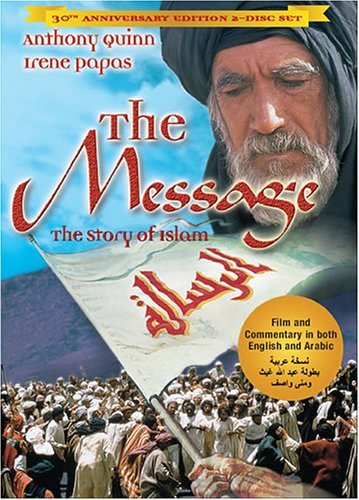
Al-Akkad did not say these words out of modesty but out of a firm belief that international and Western cinema do not in the least outshine the Arabic cinema in individual creative capacity. They are merely more advanced in a technical and economic sense as well as in the mechanisms of cinematic production. He mentions the Egyptian actor Abdullah Ghaith’s performance in the Arabic version of The Message, which greatly surpassed superstar Anthony Quinn’s performance in the English version.

The Message in Court

Despite its huge international success, The Message has been banned in both Egypt and Syria. However, leafing through the movie’s censorship file, I was surprised to find not a single paper referring to an objection against the film, either from Al-Azhar[1] or any other party. On the contrary, the file contained evidence that the movie’s screenplay had been approved by a number of scholars from Al-Azhar.

Al-Akkad himself affirmed the approval of Al-Azhar. “In fact, I was sitting side by side with Sheikh Muhammad Mutwalli Al-Sharawy as he was watching the film, and in the end he asked for more. I brought Harry Kiggaf from Hollywood to stay in the Cairo Nile Hilton for a year to write the screenplay for the film in cooperation with Abdul-Hamid Jodda Al-Sahar, Tawfik Al-Hakim[2], Ahmed Chalabi[3] and, from Al-Azhar, Dr. Abdul-Moneim Al-Nemer and Dr. Al-Beisar. Thus, I find the ban imposed on the movie an insoluble puzzle. I filed a lawsuit against the bans 28 years ago, which is still being studied by the court!

“What makes the puzzle more complicated,” Al-Akkad adds, “is that more than one Arabic channel showed the film without either asking my permission or anybody informing me about a lifting of the ban.”

The Essence Is Profit-Making

In addition to his well-known Islamic productions, Al-Akkad has produced a number of high-profile Hollywood films.

Most of these movies do not bear Al-Akkad’s name, such as the Halloween series, which already has eight sequels. Reflecting on the large audiences that such movies draw, Al-Akkad notes that in Hollywood a director-producer should ask himself two questions before producing a film: Who is your audience and what would you like to say?

“The cinema,” he adds, “is about entertainment in the first place. However, a good director employs entertainment to put across the ideas he would like to transmit. In this lies the artistic cleverness of the author and screenwriter. The essence of every piece of work is to establish a channel of communication with the audience and reap enough profits to produce the next movie. Unfortunately, some believe that success and making profit is a crime and shame.”

“The success of a movie,” Al-Akkad resumes, “depends on the audience and on the profits it makes. This does not involve degradation, but we have to come down to the audience, however low its level may be, and then try to subtly raise them up. This can be done neither by mystery, haughtiness, or the use of pedantic cinematic language.

“Neither Oscar prizes, Cannes prizes, critics, or decorations equal the success of a movie in the theaters. If you managed to produce a masterpiece movie without being able to gain the audience’s approval, the movie is a total fiasco. We, as cinema professionals, consider ourselves to be the link between the idea, the art, and the audience. Our success lies in our ability to employ the idea and the art to bring about a reaction: to make people cry, laugh, suffer and be thrilled.

“Furthermore, home entertainment devices have passively affected cinema and theater; at home you sit in front of a big screen, smoking, eating, and drinking. Accordingly, the cinema-goers in the USA and the rest of the world are mostly the young; 80 percent of the total audience thus imposes its interests—sex, fear, and love—on the cinema industry.”

[1] Al-Azhar, located in Cairo , Egypt , is the biggest and most well-known institution of Islamic learning in the Islamic world.

[2] Famous Egyptian novelists.

[3] Famous Egyptian scholar of Arabic language and linguistics.


Source: Islam Online

[+/-] Baca Lagi

From Aleppo to Hollywood


By Maged Hebtah
Translated by Abdelazim R. Abdelazim
09/08/2004

How did a young man born in 1933 in Aleppo (Halab), Syria’s second largest city, become attached to the cinema? And how did he make his way to the United States in 1954?

Al-Akkad relates his story with a calmness conjuring up the coziness of dear reminiscences of a man who has chosen to cling to his origins. He reveals that his love for the cinema stems from a small cinema that was owned by one of his old neighbors.

“I always accompanied that man; I used to watch how he cut the scenes and put the film into the projection device. It was my passion in life. Gradually I started dreaming of becoming a moviemaker. When I turned 18 I started announcing my enthusiasm to become a film director, and not just any director; a Hollywood director. The whole Aleppo neighborhood used to laugh and make fun of me.”

California Dreaming

Al-Akkad affirms that he does not blame his neighbors for thinking he was crazy. The dream, in a way, was a kind of craziness. “In addition to the fact that a job in the movie world was socially unacceptable,” Al-Akkad explains, “my father was a poor man. The best he could do was enroll me in an American school. However, despite the mockery of others, I didn’t give up my dream and began to take steps towards its fulfillment, one of which was applying to UCLA (University of California atLos Angeles). It came as a great surprise when my application was accepted!”

I ask about what his family thought of all this and expect the response narrated by most actors and actresses who relate the story of their early steps towards stardom: that his family strongly opposed the idea and that his father tried to convince him to forget about his dream altogether.

However, Al-Akkad’s story does not fit the general paradigm. “My father brought me up on the principle of self-reliance. His comment was, ‘You should do what you want to do and choose to live your life as you wish; but I’m afraid I cannot help you financially.’ Thus, I was forced to work for a year to be able to pay for my education. After this year I told my father I would be traveling to the United States. He put $200 into one of my pockets and a copy of the Holy Qur’an into the other and said, ‘This is all I can give you.’ However, he had already given me the most invaluable of things; he brought me up to be morally and religiously mature and responsible. Whenever I remember him, I praise Allah for having blessed me with this father, who sent me to America penniless but rich in morality, religion, and heritage—the reasons I still cherish my Arab Muslim background.”

Inferiority Complex

I asked him whether being an Arab called Mustapha caused him any trouble in America.

“Of course, there were many troubles, but they were not initiated by those around me. The problem was inside of me. I went to the United States laden with inferiority complexes because I wrongly thought I was inferior to those around me, that they were far more intelligent than me, and that it would be difficult or even impossible to emulate them. However, once I sat at my desk and mingled with other international students, I found that being an Arab Muslim did not make me inferior in any way. Conversely, I realized from the very first class that there had never been a difference between me and any Western student, and that I possessed the qualities that would make me surpass them. When I studied society there, I realized that I was morally stronger than them and truly appreciated the moral values with which my father had raised me. After this illumination, I experienced a transformation in my way of thinking, and the inferiority complexes turned into self-confidence. From that point onwards, I began studying Arab-Islamic civilization to deepen my sense of self-confidence and awareness that we had been leading the world at a time the West was inhabited by a group of barbaric tribes. I learned that we had been much more advanced in many branches of knowledge while they were in a state of ignorance and backwardness. These are the themes I have ever since been trying to visualize on the big screen: portraying the days in which we ruled Andalusia, taught the ‘barbaric’ and ignorant Europeans the sciences of astronomy and medicine, and helped them to put their feet on the ladder of civilization.”

So, what about your name specifically, I asked again.

“As far as my name is concerned,” he replied, “there is no doubt that it has caused me severe problems, to the extent that many have advised me to change it so that I could practice my work more easily. I resolutely refused. I firmly believe that changing the name chosen for me by my father would mean rejecting my identity as well as the man who raised me. I realized that the worst my name could do to me was to make me more determined to exert effort to increase the demand for me. I worked incessantly to gain the respect of my colleagues and audience. I’d like to highlight the fact that others won’t respect you unless you respect yourself.

“Those Arabs who come to the United States, change their names, and deny their Arabic tongue only to make more money disgust me. This opportunism is due to inferiority complexes that they are not managing to get rid of. They simply assimilate completely and deny everything, even their own selves; they forget themselves.”

I asked him, “You cherish your name and work hard to distinguish yourself; how did you manage to achieve this?”

“I armed myself as a cinema director and leaned on my Arab Islamic background, which provided me with the creative capacity to learn to command the secrets of the seventh art and the American cinema, which dominates internationally. Praise be to Allah, I managed to firmly enforce my artistic presence because I mastered my cinematic language and instruments. I believe this is reflected in The Message and Lion of the Desert. The Message acquainted Western society with the true Islamic religion and Lion of the Desert very credibly reflects the current tragic situation in Palestine!”

I ask Al-Akkad what his presence in Hollywood has accomplished for him in the movie industry. He says, “They now know for sure that I can make profit-reaping, audience-attracting movies. That’s why their studios seek my experience. Universal Studios asked to me to direct Halloween 8, and many other production companies seek my professionalism.”

During the interview, a young man resembling Al-Akkad greets us. Al-Akkad introduces him as his son Malik and says, “He has been fond of cinema direction ever since he was a child and specialized in it. Considering his young age, he has already overtaken me. He participated in directing Halloween very distinctively. Because he can communicate with and understand the youth better than me, I always ask his opinion whenever I want to address them. He will assist me in directing Saladin. Even though he has been raised in America, he attaches much value to his Arabic background and origin.”

Perhaps he notices the surprise on my face, so he says, “Don’t be astonished. If you visit my home, you’ll feel as if you are in Aleppo —its atmosphere, food, music, language, and religion. However, when I go out and close the door behind me, I become an all-American man in my way of thinking, practicality, logic, work ethics, and everything else.”


Source: Islam Online

[+/-] Baca Lagi

Saladin and Other Projects

By Maged Hebtah
Translated by Abdelazim R. Abdelazim
09/08/2004

“Ice over a hot bosom” is the Arab expression by which Al-Akkad’s situation can be most eloquently summed up. The phrase describes his relationship with the Arab world, whose reaction to his cinematic efforts has been conspicuously cool.

It is well known that Al-Akkad has been hunting for a financer for his movie project Saladin for over twenty years. Hence, as I was formulating my first question to him, I was silently hoping that he would tell me that he had finally obtained the resources. I had read about negotiations between him and some Arab financers, but these turned out to have been in vain. “Most of these negotiations,” he said, “have been aborted due to non-cinematic reasons.”

Al-Akkad tells me about an Arab prince who wanted to finance the project only in return for choosing the movie’s heroine, who would have been a superstar. He also tells about a political regime that was only willing to finance the project on the condition that he would direct a movie about its leader. There have been negotiations between him and an Arab director-producer who would have financed the film only if some “slight” modifications to the screenplay were made. According to Al-Akkad those “slight” modifications would have virtually destroyed the project’s aim.

Al-Akkad is willing to negotiate only as long as there are “no political sacrifices to be made and no obligations upon me to direct movies about individuals who do not deserve the praise they would have me shower them with.”

Saladin in Akkadian Perspective

Al-Akkad believes that a biography of Saladin should be screened in several high-quality movies rather than one long epic. There already exists more than one cinematic rendition of the story of Saladin, for example, the Egyptian Director Yousef Shahin’s Saladin the Victorious and the Egyptian Director Hossam El-Din Mustafa’s serial The Vulture of the East.

When I discuss these films with Al-Akkad he points out that those works, although important, are in the Arabic language and address an audience with an Arab cultural background. “The character of Saladin,” he says, “should be presented to the outer world through a big production that addresses the non-Arab viewers in a language they understand and interpreted by actors/actresses well-known to them. The movie would then achieve its expected effect because it would crystallize its message in a way the foreign audience can relate to.”

When I brought up the previous films on Saladin, I had expected a very different response. I had expected the director to focus on the present need for Arabs and Muslims to study the character of Saladin. However, he explains that his main aim has been to shed light on the Arab historical heritage. “In the light of unjustified accusations of terrorism directed towards the Arab world, Saladin is—in my perspective—the most suitable character to present to the West as our mouthpiece. Is there a more barbaric example of religious terrorism than the medieval Crusades that Saladin confronted? However, nobody accuses Christianity of breeding terrorism.”

Al-Akkad asserts that the present Arab status quo very much resembles the Arab condition during the days of Saladin. “The Arabs back then,” he explains, “were few in number, disunited, and fighting among each other. It was Saladin who united them, purified their regimes, and defeated the Crusaders. Through my movie I want to transmit the message that we are in need of such a man, or at least in need of following his strategies in order to face today’s challenges and overcome those waiting to ambush us.”

“My desire to make this movie,” he adds, “stems from a persisting problem, namely, Jerusalem. Historically, the movie will depict the city from an Arab and Muslim perspective. Saladin united the Arabs, conquered the usurped land, and acted as a protector for all religions, doing justice to both Muslims and Christians alike. The Crusaders, or the Franks, on the other hand, demolished churches, killed monks, set fire to Byzantium, and slaughtered Jerusalem’s Muslim, Christian, and Jewish inhabitants. I will present Saladin as the embodiment of magnanimity, nobility, and morality. The West is more aware of Saladin’s virtues than we Arabs are. The biography of Saladin is but the contemporary projection of today’s events. The Palestine of his day is the Palestine of today. He “purged,” united, and morally conquered. I want to produce Saladin to emphasize the Arab character of Jerusalem.

An American Screenplay for Saladin

To my question of whether the screenplay has already been completed, Al-Akkad answers in the affirmative: “The screenplay is ready, and its writer is John Heil, an American.”

In response to my surprise the director explains, “Why wouldn’t he? I agreed with him that the script will be translated into Arabic, so that Arab-Muslim historians can revise it. After their approval the screenplay will be translated back into English. We planned this for accuracy’s sake. I dealt with my movie The Message in the same way.”

In response to my question why he chose Sean Connery for the lead, Al-Akkad proceeds enthusiastically: “He is without a doubt the most qualified to interpret the role of Saladin. In addition to his skills as an actor his eastern features make him the perfect choice. Sean Connery’s name would also draw the desired audience. He likes the Arabs and is familiar with our history. He always tells me off for having chosen Anthony Quinn to star in two of my films and always reminds me that he is looking forward to work with me.”

A movie about Saladin will be very costly, if only for the many big battles to be staged and Sean Connery’s wage, which in itself equals a full movie budget.

I ask Al-Akkad about the required budget to start work on the film. “I need $80 million, though I am sure the film will make many times as much in profits. You see, historical films in general reap great returns, and a movie starring Sean Connery would make tremendous revenues. Let me illustrate this with the example of The Message, which back then cost $17 million for producing both the Arabic and international versions. The international version returned ten times the costs, was dubbed into 12 languages, and still makes profits until now. The American Department of Defense, for instance, bought 100,000 copies of The Message for its soldiers to view before being sent off to Afghanistan!”

Chechnya and Jerusalem

Saladin is not the only project in the pipeline; Mustapha Al-Akkad has more up his sleeve. “During the war in Bosnia, I thought of making a movie about the conflict entitled Wa-Mu`tasamah[1]. For a while now, I have been playing with the idea of making a film about Jerusalem. I also hope to make a portrait of Muhammad Shamil[2], the Chechen who fought the Russian czars.

“I have also finished reading a script for a new movie project that sheds light on a particular period in Islamic history. It is based on a historical document published by the British Sunday Times. It relates the story of a delegation sent by the King of England John III to the Muslim caliph in Cordoba, proposing that the English embrace Islam, pay the jizyah[3] to the caliph, and be under Muslim patronage. The latter’s reply was ‘A king who willingly sells his people and kingdom does not deserve our patronage.’ This event took place in 1213. The document published by the British Sunday Times lists the names of the English delegation members who submitted the proposal. The script will be written by European authors to render the message more powerful.

[1] Al-Mu`tasam was an Abbasid caliph who is famous for waging a war to release a single female captive from her prison after she called for his help saying, “Wa Mu`tasamah!”

[2] Muhammad Shamil (1797 – 1871) was a Chechen Sufi imam who led his people in a jihad against the Russians after their invasion of Chechnya in the late 1700s. He became famous for his inspiring speeches and poems that were chanted on battlefields. He was the first to found a national territorial state in Chechnya, while until then every town and village had been independent in practice.

[3] A tax that non-Muslims paid to their Muslim rulers in return for protection.


Source: Islam Online

[+/-] Baca Lagi

Mustapha Al-Akkad: A Cinematic Puzzle


By Maged Hebtah

For those who do not remember the name, Mustapha Al-Akkad is the director of The Message and Lion of the Desert, two great films that established his name as an internationally renowned director.

Dozens of questions have been triggered about why the screening of The Message has been banned in Egyptian cinemas and on official TV channels of several countries despite the fact that it has been successfully screened almost all over the globe. The puzzle gets more complicated when considering that Al-Azhar, Egypt’s highest religious institution, approved of the movie’s screenplay. The need for the movie’s director to shed light on these issues has hence been pressing.

In my interview with him, he talked about the many projects he hopes to realize in the future. One of these is the Saladin movie for which he has failed to find a financer over the past twenty years, in spite of the fact that the famous actor Sean Connery has expressed his willingness to star in it. Al-Akkad also spoke about how his reputation has been tarnished by embarrassed directors who attributed their failed cinematic projects to him.

The director still waits for a helping hand to share in the fulfillment of his dreams and realization of his projects—projects which, he believes, the Arab world is more badly in need of than the building of arms arsenals from which no single bullet will be fired in the end.


Source: Islam Online

[+/-] Baca Lagi

Sunday, June 14, 2009

Filem Islam


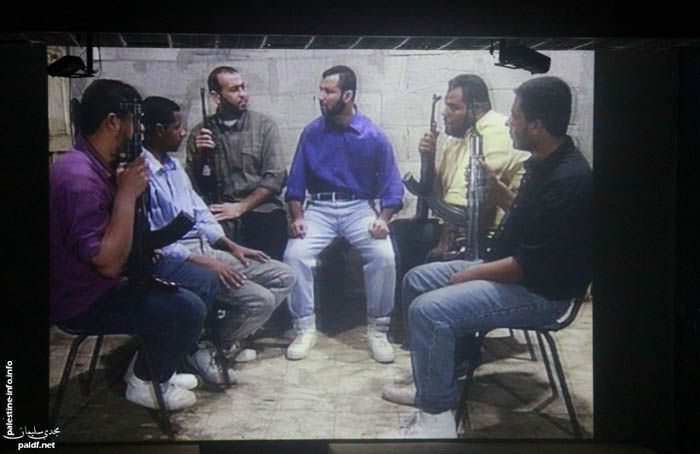
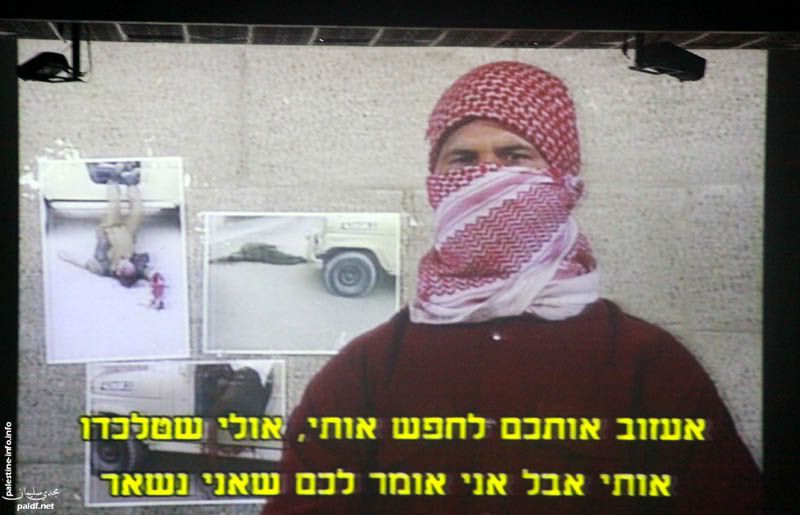
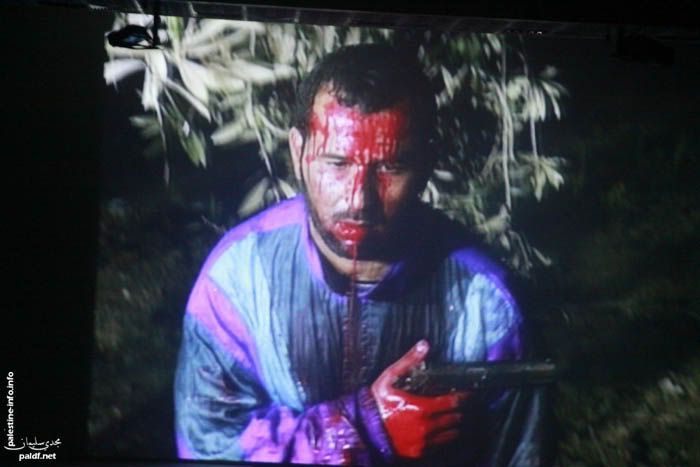
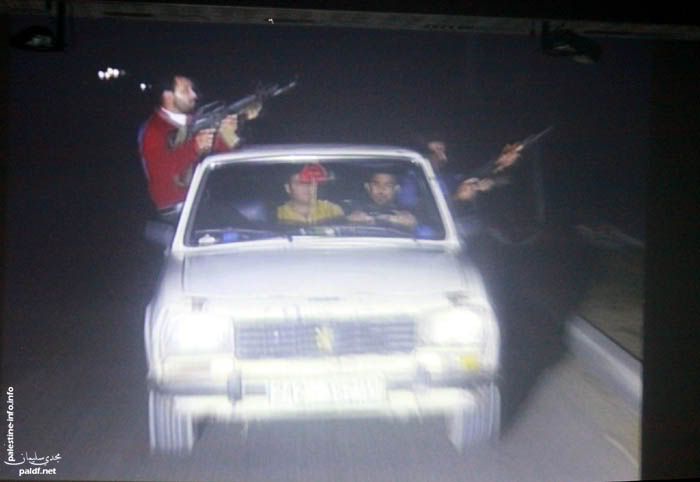
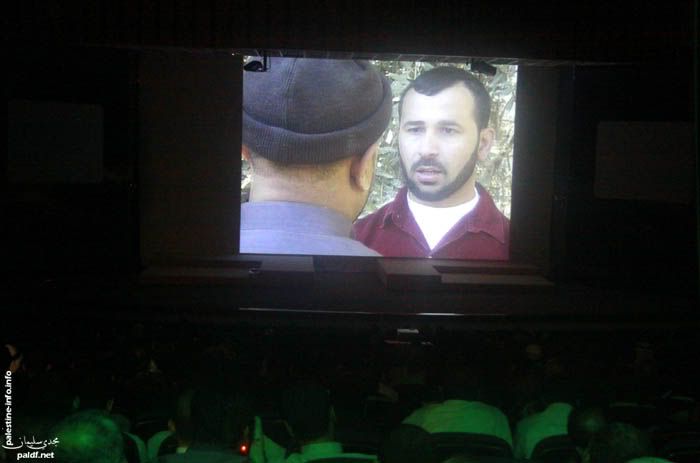
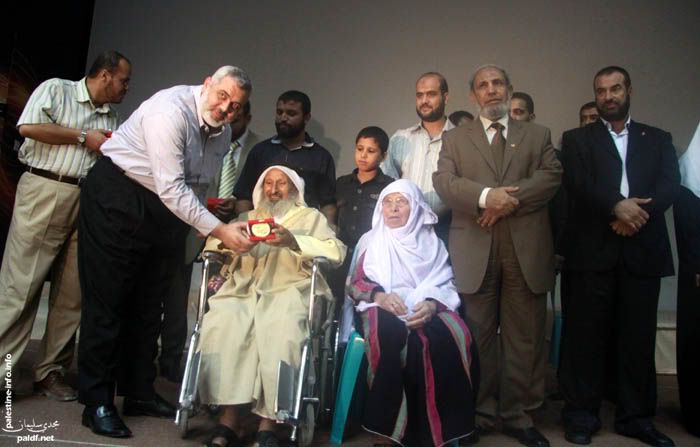
Islam itu syumul. Baru nampak aplikasi pelajaran selama ini dalam kehidupan. Sebelum ini Sang Murabbi oleh PKS. Kini Emad Akel oleh Hamas. Penulisnya pula Dr Mahmoud Zahhar sendiri.

Paling mengagumkan, 4 orang daripada pelakon filem ini yang terdiri daripada ahli Hamas telah syahid terbunuh dalam serangan Israel.

فيلم سينمائي عن الشهيد عماد عقل

لم يمنع الحصار الذي يطوق قطاع غزة منذ نحو ثلاث سنوات فنانيه من الإبداع والإنتاج، فقد خرج إلى الوجود من هذه البقعة المحاصرة فيلم هو الأول من نوعه من حيث الظروف التي تم إنتاجه فيها.


ويتناول الفيلم حياة الشهيد عماد عقل الذي كان أحد أبرز قادة كتائب عز الدين القسام الذراع العسكري لحركة المقاومة الإسلامية (حماس)، وكان المطلوب الأول لقوات الاحتلال الإسرائيلي لسنوات طويلة نهاية القرن الماضي، قبل أن تغتاله في نوفمبر/تشرين الثاني 1993.

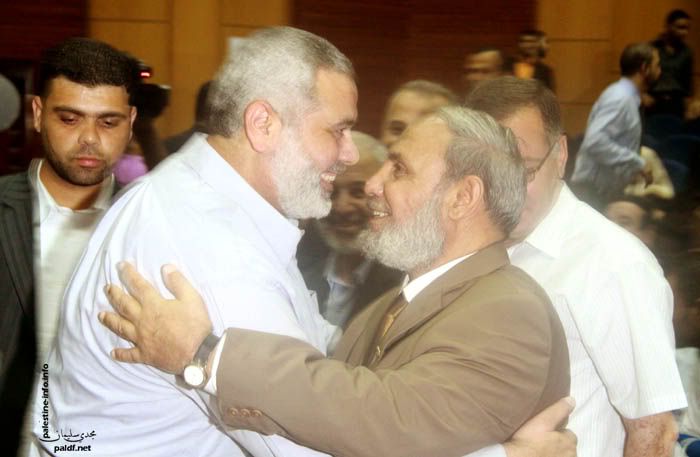
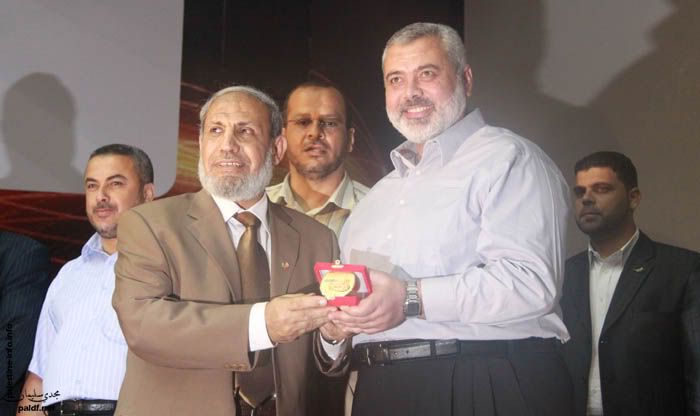
وكتب سيناريو هذا العمل السينمائي عضو المكتب السياسي لحماس الدكتور محمود الزهار، وأخرجه المخرج الفلسطيني ماجد جندية وأنتجته شبكة الأقصى الإعلامية.

اللبنة الأولى
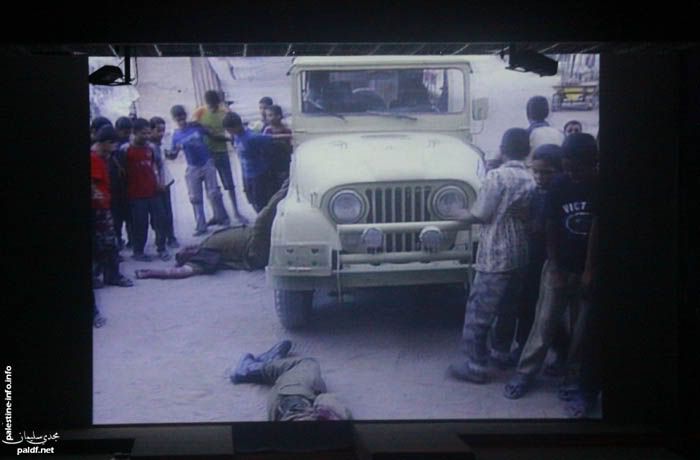
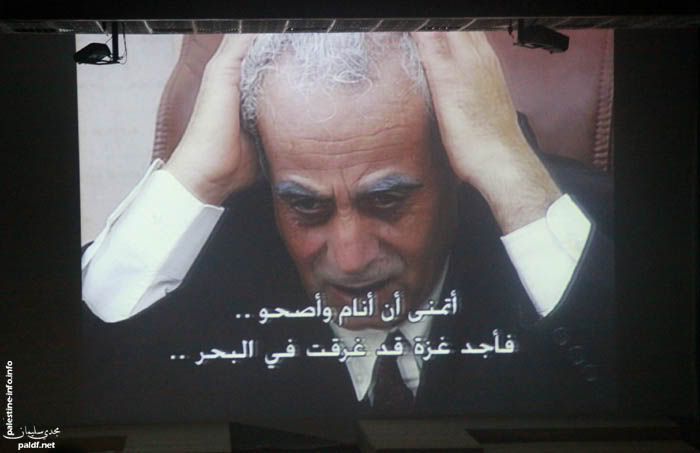
ويقدم الفيلم الذي عرض مساء أمس الجمعة في قاعة المؤتمرات بالجامعة الإسلامية في مدينة غزة، الحياة الجهادية والدعوية للشهيد عقل منذ ولادته وحتى ساعة استشهاده.

وأعرب مخرج الفيلم عن أمله في أن يكون "اللبنة الأولى لأعمال سينمائية إسلامية جادة تبدأ من قطاع غزة المحاصر"، مضيفا أن هذا العمل "استطاع تسليط الأضواء على حياة الشهيد عماد عقل بشكل كبير جدا منذ أن ولد مع معاناة الشعب الفلسطيني".

وأوضح جندية أن الفيلم "تطرق إلى دور الدكان الموجود في المخيم وغطرسة جيش الاحتلال الصهيوني حين كان يعاكس النساء عند البئر الموجودة في المكان، وكان عماد يعاصر هذه الأشياء في طفولته".

وقال "لم نأخذ السيناريو كما هو للتطبيق، بل ذهبنا إلى أشخاص عايشوا عماد عقل وشاهدوه على أرض الواقع، إلى درجة أننا أحضرنا اللباس الذي كان يلبسه عماد عقل عند استشهاده".

آثار الحصار
وعن آثار الحصار على إنتاج الفيلم أكد جندية أن عمله "تعرض للحصار الذي تعرض له قطاع غزة، ومر بجميع تفاصيل هذا الحصار"، مشيرا إلى أن جميع الفنانين الذين شاركوا فيه "استطاعوا أن يتحملوا حصار غزة".

ويعتبر عماد عقل من أبرز المقاومين الفلسطينيين الذين برزوا في الانتفاضة الأولى، ونفذ عددا كبير من العمليات الفدائية أدت إلى مقتل وجرح عشرات الجنود الإسرائيليين في كمائن محكمة نفذها بين أعوام 1990 و1993.

وكان يصفه رئيس الوزراء الإسرائيلي ووزير الدفاع في الوقت نفسه آنذاك إسحق رابين بالقاتل ذي الأرواح السبعة، وقد استشهد بعد محاصرته في حي الشجاعية شرق مدينة غزة يوم 24 نوفمبر/تشرين الثاني 1993.

ٍSource: http://www.aljazeera.net/NR/exeres/34F4D4B8-BFBB-44D8-AB68-C84E2D347A76.htm


First Hamas-made movie begins Gaza Strip run

By Nidal al-Mughrabi

GAZA (Reuters) - The audience in the Gaza Strip clapped and cheered as the actor delivered the movie's most memorable line.

"To kill Israeli soldiers is to worship God."

"Imad Aqel," which had its premiere on Saturday, is the first feature film produced by the Islamist Hamas movement and the title is the name of a Palestinian militant whom Israel held accountable for the deaths of 13 soldiers and settlers.

In accordance with strict Muslim tradition, men and women sat in separate sections of the theater to view what Hamas officials termed the "Cinema of Resistance," referring to what it describes as a fight against Israeli occupation.

"Imad Aqel" was filmed on a set built inside the former Jewish settlement of Ganei Tal in the Hamas-controlled Gaza Strip.

It depicts Hamas's founding in the 1980s, attacks Aqel mounted on the Israeli military in the West Bank and Gaza Strip and the signing of the Oslo peace accord between Israel and the Palestine Liberation Organization in 1993.

The film cost $120,000 and was written by Mahmoud al-Zahar, a senior leader of Hamas, which the West regards as a terrorist group and shuns because of its refusal to renounce violence, recognize Israel and accept existing interim peace deals.

Aqel was killed at the age of 22 by Israeli soldiers who surrounded his hideout in Gaza in 1993.

Four of the actors in the film, which took several months to make, were later killed in the 22-day offensive Israel launched in the Gaza Strip last December with the declared aim of halting cross-border rocket attacks by Palestinian militants.

Majed Jendeya, the movie's German-trained director, said he hoped to screen the film at the Cannes festival in France. The movie is Hamas's latest foray into the mass media -- it owns a satellite TV channel, a radio station and several newspapers.

(Editing by Tim Pearce)

Sumber: http://www.reuters.com/article/filmNews/idUSTRE5721L720090803


First film produced by Hamas screens in Gaza

Imad Aqel is an action-packed movie of the life and violent death of a Hamas militant who topped Israel's most-wanted list

The film's hero is a young militant, blamed by Israel for the deaths of 13 soldiers and settlers, who was killed at the age of 22 in a firefight in 1993. Many of the actors are Hamas members and, since the movie was finished, four of them have been killed in an Israeli attack. This is Imad Aqel, the first feature film funded by Hamas.

The film began showing at a cultural centre in Gaza at the weekend. Shot on the grounds of Gnai Tal, one of the Jewish settlements evacuated in 2005 when Israel withdrew from the territory, it is a two-hour, action-packed thriller celebrating the life and martyrdom of Aqel, a commander of the Hamas military wing who topped Israel's most-wanted list.

According to newspaper reports, the line that elicits the biggest cheer from the Gazan audience is when one of the characters declares: "To kill Israeli soldiers is to worship God."The film's director, Majed Jendeya, says he hopes to screen Imad Aqel at the Cannes film festival.

The movie was written by senior Hamas member Mahmoud al-Zahar and produced by the interior minister, Fathi Hamad. It cost $120,000 (£70,600) and is the first film to be produced by the Islamist organisation.

"It's Hamaswood instead of Hollywood," said Hamad after the film's premiere last month at Gaza City's Islamic University. "We are trying to make quality art that is Islamic and about the resistance, without provocative (sexual) scenes."

The biopic is just the latest effort in Hamas's media campaign to instil a "culture of resistance" in the territory. It also owns a satellite television station, a radio network and websites, as well as sponsoring art exhibitions, plays and poetry which tell of the harsh conditions in Gaza.

Sumber: http://www.guardian.co.uk/film/2009/aug/05/hamas-first-film-gaza


Hamas-funded film opens in Gaza

The first film backed by the Palestinian militant group Hamas is showing in cinemas in Gaza.

It tells the story of Hamas member Imad Aqel, who led many attacks on Israel before he was killed in 1993.

The making of the film is a sign of how Hamas is increasingly trying to extend its influence through cultural as well as political and military means.

Israel, the US and EU say Hamas is a terrorist group. Its supporters say it defends Palestinians from occupation.

Media work

Imad Aqel was a young Hamas militant regarded as a hero in Gaza and a terrorist in Israel.

He was involved in a number of attacks on Israeli targets in the early 1990s.

Israel holds him responsible for the killing of 13 soldiers and settlers.

His hideout in Gaza was finally surrounded by Israeli forces in 1993 and he was killed at the age of 22.

Hamas has chosen his life story as the subject of the first feature film that it has funded.

The film cost $120,000 (£71,000) and was written by a senior Hamas member.

Newspaper reports say the line that has brought the biggest cheer from the audience is when one of the characters declares: "To kill Israeli soldiers is to worship God".

The film was shot over several months last year. Since then, four of the actors have been killed in an offensive Israel launched against Hamas in Gaza back in January.

The director has said he hopes to enter the film for the Cannes Festival, although there is no indication that Cannes would accept it.

Hamas already has a formidable media operation - it runs a television station, a radio network and several newspapers.

It sponsors arts festivals, plays and poems, most of which highlight the harshness of Gazan life.

The financing of this film is the latest development in what Hamas calls its "culture of resistance".

Sumber: http://news.bbc.co.uk/2/hi/middle_east/8183823.stm


Sumber gambar: http://www.almoltaqa.ps/english/showthread.php?t=12304


[+/-] Baca Lagi

Friday, June 5, 2009

Arranged


(Ketika saya menonton filem ini, Obama sedang berada di Mesir sempena siri lawatan beliau ke negara-negara Islam di Timur Tengah.)

Filem ini memaparkan interaksi antara pelbagai bangsa yang hidup di Amerika Syarikat, terutamanya dua bangsa yang bergolak iaitu Islam dan Yahudi. Justeru, filem ini mengisahkan persahabatan yang terjalin antara dua wanita yang masing-masing daripada bangsa tersebut. Mereka ialah Rochel Meshenberg(Zoe Lister Jones)-seorang Yahudi Ortodoks dan Nasira Khaldi(Francis Benhamou)-seorang Muslim. Mereka sama-sama mengajar di sebuah sekolah UN yang muridnya terdiri daripada pelbagai bangsa. Mereka juga sedang dicarikan jodoh oleh keluarga mereka dan diadakan beberapa siri pertemuan.

Mereka hidup dalam keluarga yang berpegang teguh pada agama masing-masing. Suasana dan hubungan baik antara mereka dengan keluarga masing-masing membina diri mereka menjadi remaja yang baik dalam beragama dan terjaga daripada gejala sosial yang merebak teruk di Amerika Syarikat. Namun , Rochel hampir terjebak apabila ada krisis antara dia dan keluarganya. Mujur pendidikan sejak kecil telah membentuk jatidiri yang kuat, akhirnya dia sendiri yang memilih untuk tidak menjebakkan diri ke dalam kancah gejala sosial.

Saya mengetahui kewujudan filem ini apabila membaca ulasan saudara Faisal Tehrani dalam blog beliau. Pelik apabila mendapat tahu penulis filem ini bukanlah seorang Islam, tetapi berjaya menggambarkan Islam dengan benar dan tidak prejudis. Malang dan menyedihkan apabila ada Muslim yang membodohkan diri menghina,memburukkan dan mencipta salah faham terhadap Islam dalam filem-filem mereka.(Terbaru filem Perempuan Berkalung Sorban yang menyerapkan fahaman Islam Liberal, saya akan cuba mengulas filem itu tak lama lagi)

Wanita-wanita Liberal mendakwa memakai tudung mengongkong kebebasan wanita. Namun, pendapat itu disangkal dalam filem ini apabila Nasira menyatakan pendirian bahawa dia bertudung bukan atas dipaksa dan tidak dikongkong, tetapi atas pilihannya sendiri.

Kemodenan dan kebebasan yang diamalkan secara tidak sihat oleh generasi kini turut dipertikaikan apabila berlaku perbalahan antara Rochel dan pengetuanya. Dia mempertahankan budaya-budaya tradisional yang dikritik oleh pengetuanya. Jawapan Rochel membuatkan pengetuanya terkedu,"Why is getting drunk and sleep with a man you don't even know as a way of finding love?". Secara tidak langsung dialog ini menjawab persoalan kenapa watak-watak dalam filem ini cukup menjaga hubungan antara lelaki dan perempuan(Rochel tidak bersalam dengan lelaki kerana dalam agama Yahudi juga melarang lelaki perempuan bersentuhan) dan keluarga mereka yang mengatur pencarian jodoh.

Kebetulan dengan lawatan Obama, Presiden AS ke Mesir dan apabila diteliti ucapan yang disampaikan beliau ada sedikit persamaan dengan beberapa persoalan yang diketengahkan oleh filem ini. Antaranya, krisis di Palestin antara Muslim dan Yahudi dan persepsi masyarakat Amerika terhadap Muslim.(Baca ucapan Obama di sini)

Filem ini amat baik. Banyak nilai-nilai murni yang dipaparkan dan mesej disampaikan dengan bagus dan melalui cara yang bermutu serta kreatif. Tidak perlu berfikiran sempit melakonkan babak-babak rempit dan melambakkan senario maksiat dalam filem untuk memberikan keinsafan kepada masyarakat.

Untuk ulasan yang lebih mantap berkenaan filem ini anda boleh baca di blog Faisal Tehrani. Klik.

[+/-] Baca Lagi

Saturday, May 16, 2009

Hari Guru dan Laskar Pelangi

Malaysia menyambut Hari Guru pada 16 Mei. pada hari ini pelajar-pelajar dan bekas-bekas pelajar akan mengucapkan Selamat Hari Guru kepada guru 'kesukaan' mereka. Guru-guru yang popular akan mendapat banyak hadiah sebagai tanda mereka diingati dan dihargai. Tidak kurang ada juga guru-guru yang berasa pada hari ini kerana tidak menerima apa-apa ucapan atau hadiah, atau menerima sedikit hadiah berbanding guru-guru lain.

Oleh sebab itu, amalan menghargai guru haruslah tidak terhad kepada hari dan yang disukai sahaja. Sepatutnya, penghormatan kepada guru harus dizahirkan sentiasa. Apatah lagi menghormati guru memang dituntut dalam Islam.


Selawat dan salam kepada Rasulullah S.A.W., guru teragung umat Islam. Bagindalah yang telah mengajarkan umatnya tentang Islam. Bagindalah yang memimpin umatnya ke jalan Allah s.w.t.
Juga kepada para sahabat, penerus legasi Rasulullah s.a.w., tabi'in, tabi' tabi'in, dan para ulama pewaris nabi. Merekalah yang menyampaikan ajaran Rasulullah s.a.w. sehingga kita kini kenal dan tahu.

Terima kasih kepada para guru yang sentiasa ikhlas mengajar muridnya agar darjat kami naik menjadi manusia yang berilmu, mengenal Allah dan kehidupan, membezakan kebaikan dan kejahatan.


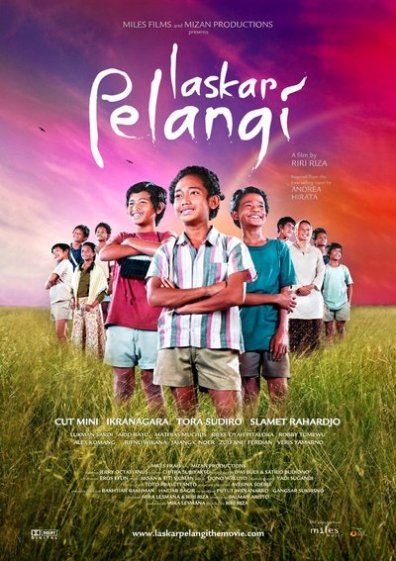
Sempena Hari Guru, ikuti sedikit ulasan saya tentang filem Laskar Pelangi.


Adapatasi karya sastera kepada filem bukan suatu yang asing bagi Indonesia. Jika sebelum ini Ayat-Ayat Cinta telah diadaptasikan, kini yang terbaru novel Laskar Pelangi karya Andrea Hirata. Proses adaptasi bukanlah suatu yang mudah kerana pembikin filem perlu memastikan keaslian karya tidak tercemar dengan kecurangan di samping seimbang dengan pengubahsuaian bagi selari dengan keperluan sebuah filem.

Jikalau kita lihat kebanyakan negara-negara yang maju dalam industri filemnya, kebanyakan filem-filem yang dihasilkan ialah hasil proses adaptasi.
Statistik industri filem dan TV Amerika menunjukkan 45% cerita televisyen adalah yang diadaptasi daripada novel dan 85% filem yang menang oskar adalah berdasarkan cerita yang diadaptasi daripada novel. - Utusan Malaysia, 20/05/2008.

Filem adaptasi berbanding filem hasil idea bukan adaptasi adalah lebih berwawasan, intelek, rapi dan kemas. Idea yang terhasil ialah idea para pemikir sasterawan dan ahli falsafah berlandaskan ilmu. Oleh sebab itu, filem adaptasi menjadi lebih bermutu dan bermakna.


Filem Laskar Pelangi yang diadaptasikan daripada novel Andrea Hirata ialah contoh terbaik sebuah filem adaptasi yang kemas dan menarik. Penulis secara peribadi belum berpeluang membaca sendiri novel karya Andrea Hirata tetapi penulis memuji hasil garapan sutradara Riri Riza.

Jalan cerita akarnya tiada beza dengan novelnya, kisah 10 anak dari keluarga miskin yang bersekolah di sebuah sekolah Muhammadiyah di pulau Belitong yang penuh keterbatasan(idwiki).


Tema yang menjadi tulang belakang filem ini ialah kesusahan bukanlah penghalang untuk mencapai kejayaan, juga bukan alasan untuk berputus asa.


Bermula dengan menanam simpati dalam jiwa penonton, mereka yang mendaftar di sekolah itu hampir tidak dapat belajar di situ kerana bilangan pelajar yang mendaftar tidak mencapai sepuluh orang(bilangan minimum yang dibenarkan untuk membuka kelas). Tergambar wajah kecewa pada setiap mereka apabila mendapat tahu mereka tidak dapat belajar kerana bilangan pelajar yang tidak cukup, namun Tuhan mentakdirkan sebaliknya bagi mereka.


Berbekalkan segala kedaifan, pelajar-pelajar sekolah ini menunjukkan semangat yang luar biasa. Sehingga mereka berjaya mencapai beberapa kejayaan dan mengharumkan nama sekolah mereka yang daif dan dipandang rendah oleh mereka yang bertaraf. Akhirnya, para penduduk sekitar Belitong juga menjadi bangga akan mereka.


Setiap pelajar mempunyai keistimewaan masing-masing dan mereka sentiasa bersama dan saling membantu. Terdapat babak-babak yang membandingkan sekolah ini dengan sekolah lain menyebabkan penonton berasa kasihan dan simpati.


Sumbangan terbesar dalam kehidupan mereka sebagai pelajar tentulah guru-guru mereka. Pak Zulkarnain, Ibu Muslimah dan Pak Bakri sanggup mendidik mereka walaupun kekurangan gaji. Tatkala itu, terdapat sahaja tawaran yang lebih mewah daripada sekolah lain untuk mereka tetapi mereka terus setia dan ikhlas mendidik anak-anak itu sehingga pencapaian yang luar biasa dicapai oleh mereka. Siapakah lagi yang akan membimbing anak-anak itu jika mereka pergi ke tempat lain? Mereka sedar bahawa anak-anak itu juga berhak mendapat pendidikan seperti orang lain walaupun mereka miskin.

Bagi penulis, lakonan Alex Komang(juga berlakon dalam filem Puteri Gunung Ledang) paling digemari. Bagaimana dia melarang anaknya Lintang daripada mengikutnya ke laut, dan menyuruhnya ke sekolah untuk belajar. Dia mahu anaknya menjadi manusia yang berpendidikan dan mempunyai masa depan yang cerah. Dia tidak mahu anaknya hidup susah sepertinya. Namun, penghujung nasib Lintang amat tragis dan menyentuh hati.


Saya berpendapat filem ini berjaya dan penuh dengan moral, membangkitkan semangat dan memerli mereka yang serba cukup namun masih gagal dan tidak bersunguh-sunguh dalam pelajaran. Filem ini juga memberi kesedaran bahawa ada golongan yang tidak bernasib baik berbanding kita dan menggesa agar kita bersyukur dengan segala nikmat yang dimiliki. Kita tidak harus melupakan mereka dan sepatutnya membantu mereka. Selain itu, jasa dan kegigihan guru amatlah penting dalam membentuk generasi muda tonggak negara dan umat, tidak sepatutnya dilupakan.


Persoalannya, adakah nasib pelajar-pelajar di luar bandar kini diberi perhatian oleh kerajaan? Apakah buktinya? Bagaimana pula dengan PPSMI? Sama-sama kita fikirkan.

[+/-] Baca Lagi